Take action
Personal choices help, but policy, product design, and infrastructure determine pollution at scale. Pick one action for today and one to do with other people. The links are Californian because that is where this site is written; every state has equivalents.
Five ways to make a difference
Each link goes to the organisation or public agency running the action. Unsure which source matters most where you live? The source predictor pairs each with an action.
- 01
Write your California legislators
10 minutes
Ask your Assembly Member and State Senator to support source reduction, stormwater controls, tire-wear research, and transparent implementation of California’s plastics laws.
Find my California representatives - 02
Join a science-led nonprofit
Ongoing
The California-based 5 Gyres Institute connects research, community education, and policy campaigns. Sign up for action alerts or bring its resources to a school or community group.
Join the 5 Gyres movement - 03
Stop debris before it fragments
One morning
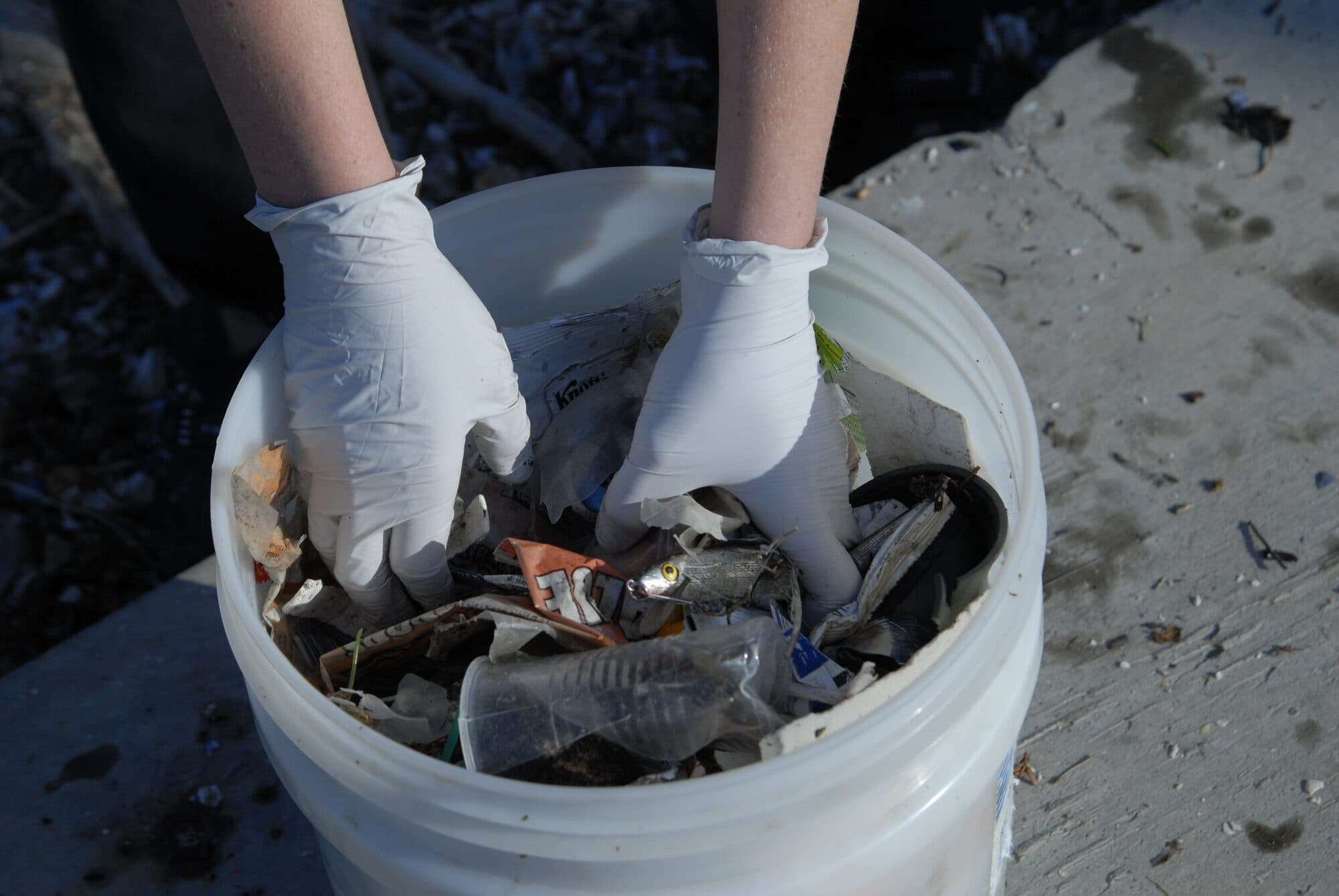
Join California Coastal Cleanup Day, adopt a beach, or organize a neighbourhood cleanup. Inland litter matters too: storm drains connect streets to rivers, bays, and the ocean.
Find a California cleanup - 04
Host a documentary discussion
One evening
Screen “Plastic People: The Hidden Crisis of Microplastics,” then work through its discussion guide with the group.
Open the screening guide - 05
Start a citizen-science group at school
One semester
Have members run the consumption calculator and the source predictor, compare results, collect local data such as litter counts before and after rain, and invite a scientist, museum educator, or nonprofit staff member to talk about what the numbers mean.
Use the classroom lesson as a starting point
A short letter is enough
Add one sentence about a beach, creek, neighbourhood, or health concern you care about.
Dear [Senator or Assembly Member],
I am a constituent from [city]. Please support strong implementation of California’s microplastics strategy and policies that prevent plastic pollution at the source, especially controls for stormwater, tire wear, and unnecessary single-use packaging.
Please also support transparent public monitoring so Californians can see whether these measures are working. I care about this because [one local sentence].
Sincerely,
[name and ZIP code]
Local organizations, one town as an example
This is the list for Claremont, where the site is written. Wherever you are, the same kinds of group exist: a sustainability nonprofit, a youth-led environmental group, and a regional environmental-justice organization. All of them take students.
- Claremont
Sustainable Claremont
Climate action, urban forestry, environmental education, and community advocacy. Runs student programs including the Green Crew urban-forestry program.
Visit Sustainable Claremont - Claremont
Teen Green
Youth-led environmental improvement projects and volunteer opportunities for high-school students.
Visit Teen Green - Claremont
Sunrise Claremont Colleges
Climate education, local-government advocacy, and social and environmental justice campaigns run by students at the Claremont Colleges.
Visit Sunrise Claremont Colleges - Jurupa Valley
Center for Community Action and Environmental Justice
Environmental justice, toxic emissions, and climate policy in the Inland Empire, with leadership and civic-engagement programs for young people.
Visit Center for Community Action and Environmental Justice - Statewide
California Climate Action Corps
An AmeriCorps program placing young people in climate-action service projects and community engagement across the state.
Visit California Climate Action Corps - Statewide
California Ocean Protection Council
The state body behind the statewide microplastics strategy. Its meetings and public comment periods are open to anyone.
Visit California Ocean Protection Council
If you are a student, this email works
Organizations answer short, specific messages. Say who you are, what you care about, and when you are free. Expect some to take weeks to reply, and follow up once.
Subject: High-school student interested in volunteering on plastic pollution
Dear [Organization] team,
I am a student at [school] in [city]. I have been learning about how microplastics from tire wear, laundry, and litter reach local creeks and the coast, and I would like to help with [cleanups / monitoring / education / policy outreach].
Could you tell me how students can take part in your programs or campaigns? I am available [after school on weekdays and on weekends].
Thank you for your time and for the work you do.
Sincerely,
[name, email, phone]