What are microplastics?
Microplastics are plastic particles smaller than 5 millimetres in at least one dimension. Some are visible as tiny coloured fragments. Others are too small to see without magnification.
The term describes a size category, not one material. A microplastic can be a fibre, film, fragment, bead, pellet, or piece of foam. It can be made from many different polymers, contain different additives, and range from nearly 5 mm down to the limits of a study’s detection method.
Definition and research overview: U.S. EPA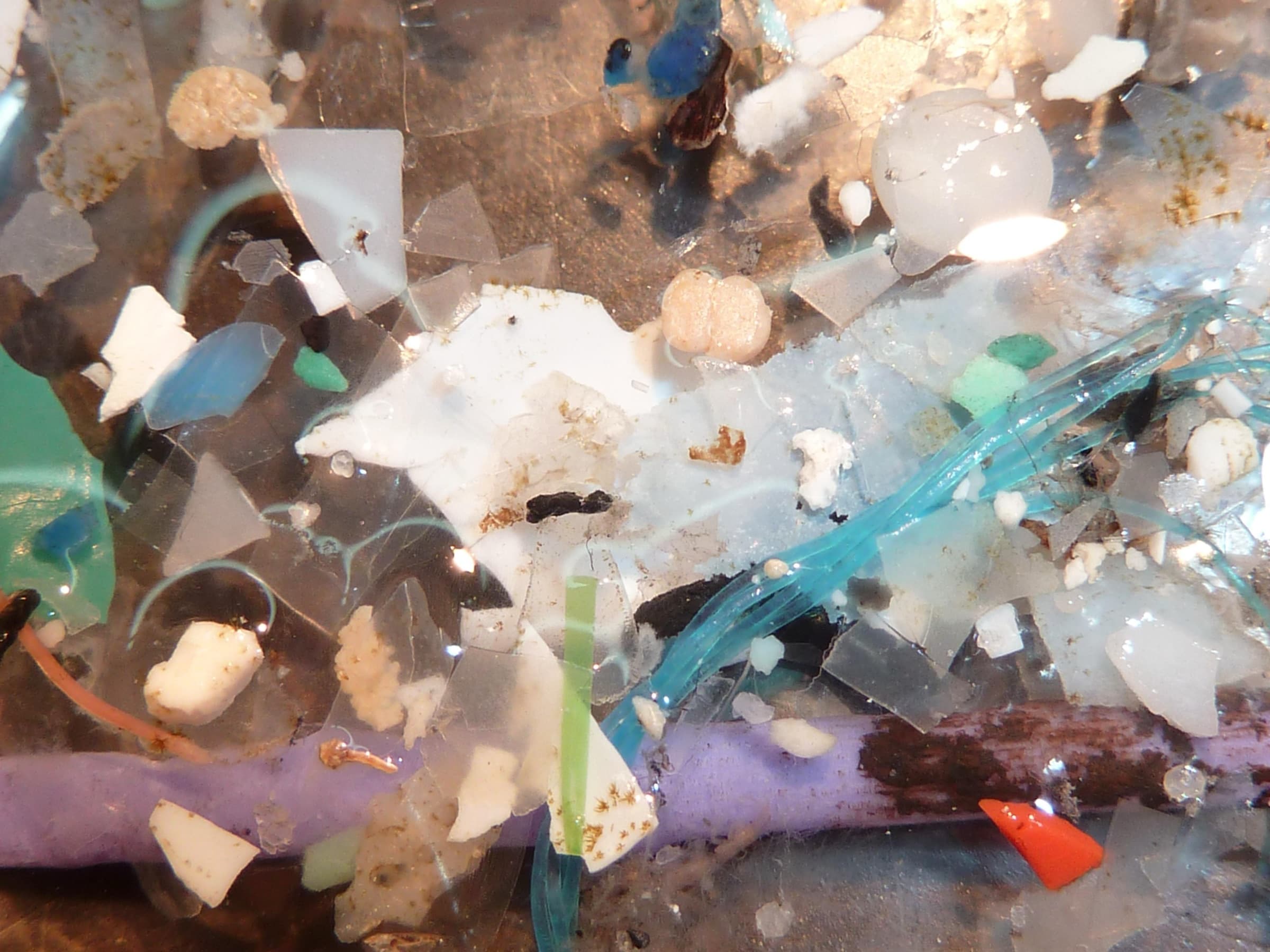
Microplastics and nanoplastics
Well establishedFive millimetres is roughly the width of a pencil eraser. A human hair is approximately 70–80 micrometres wide. Nanoplastics are generally described as smaller than 1 micrometre, although exact definitions are not yet universal.
Smaller particles are much harder to collect and identify. This is one reason particle counts from different studies cannot always be compared or combined.
5 mm
Microplastic upper boundary
70 µm
Approximate human-hair width
1 µm
Common nanoplastic boundary
How they begin
- Primary microplastics
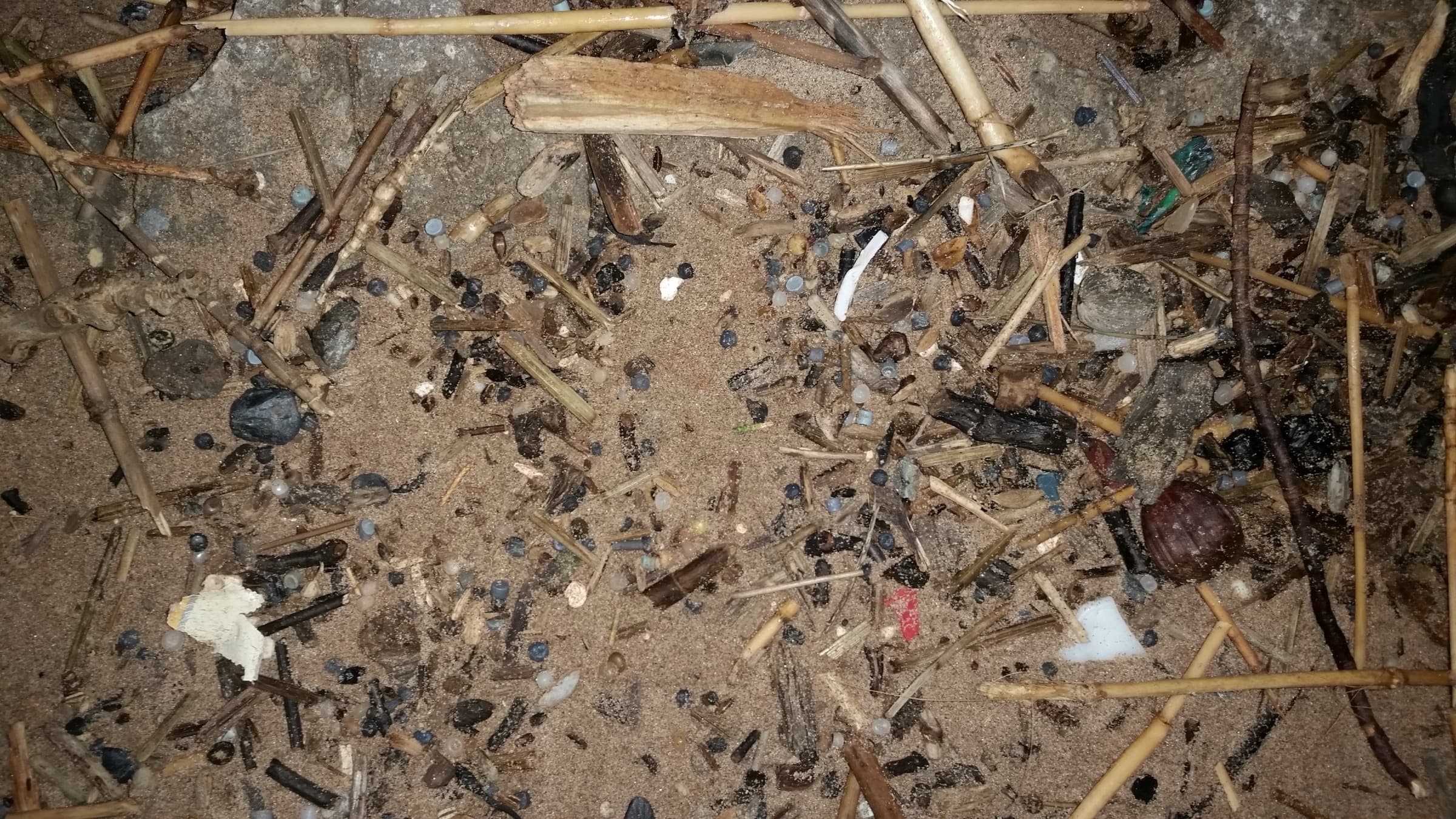
- Particles intentionally manufactured at a small size, including some industrial pellets, powders, and microbeads.
- Secondary microplastics
- Particles created when larger products shed or break apart. Sources include tires, synthetic textiles, paint, packaging, artificial turf, fishing gear, and discarded plastic.
The main particle forms
Well established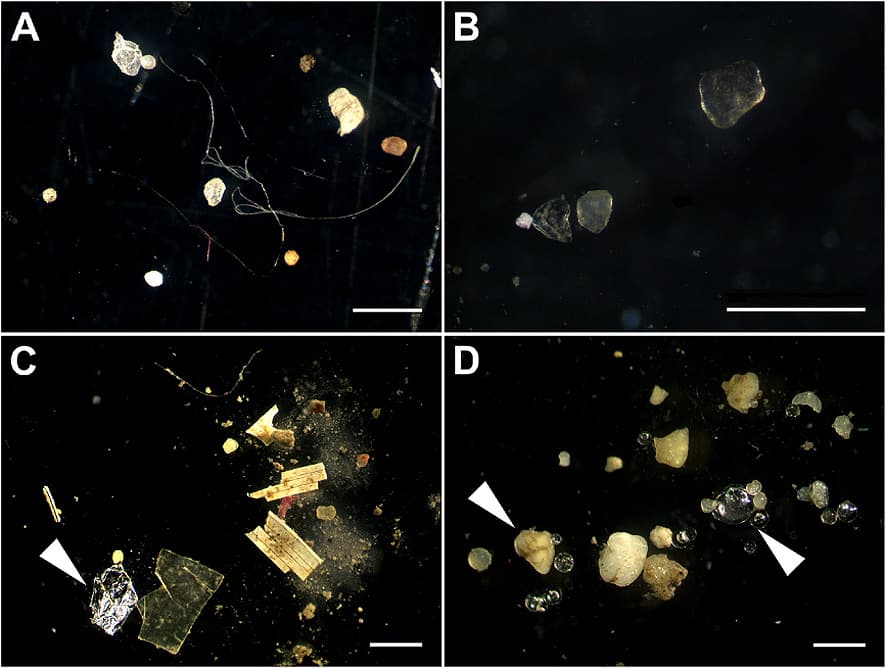
- Fragments
- Irregular pieces created when rigid plastic breaks apart.
- Fibres
- Thin strands commonly associated with synthetic textiles, ropes, and nets.
- Films
- Flexible, flat pieces that can come from bags, wraps, and agricultural film.
- Beads and pellets
- Rounded particles that may be manufactured at a small size.
- Foam
- Lightweight, porous pieces from expanded plastic products.
Why one particle is not like another
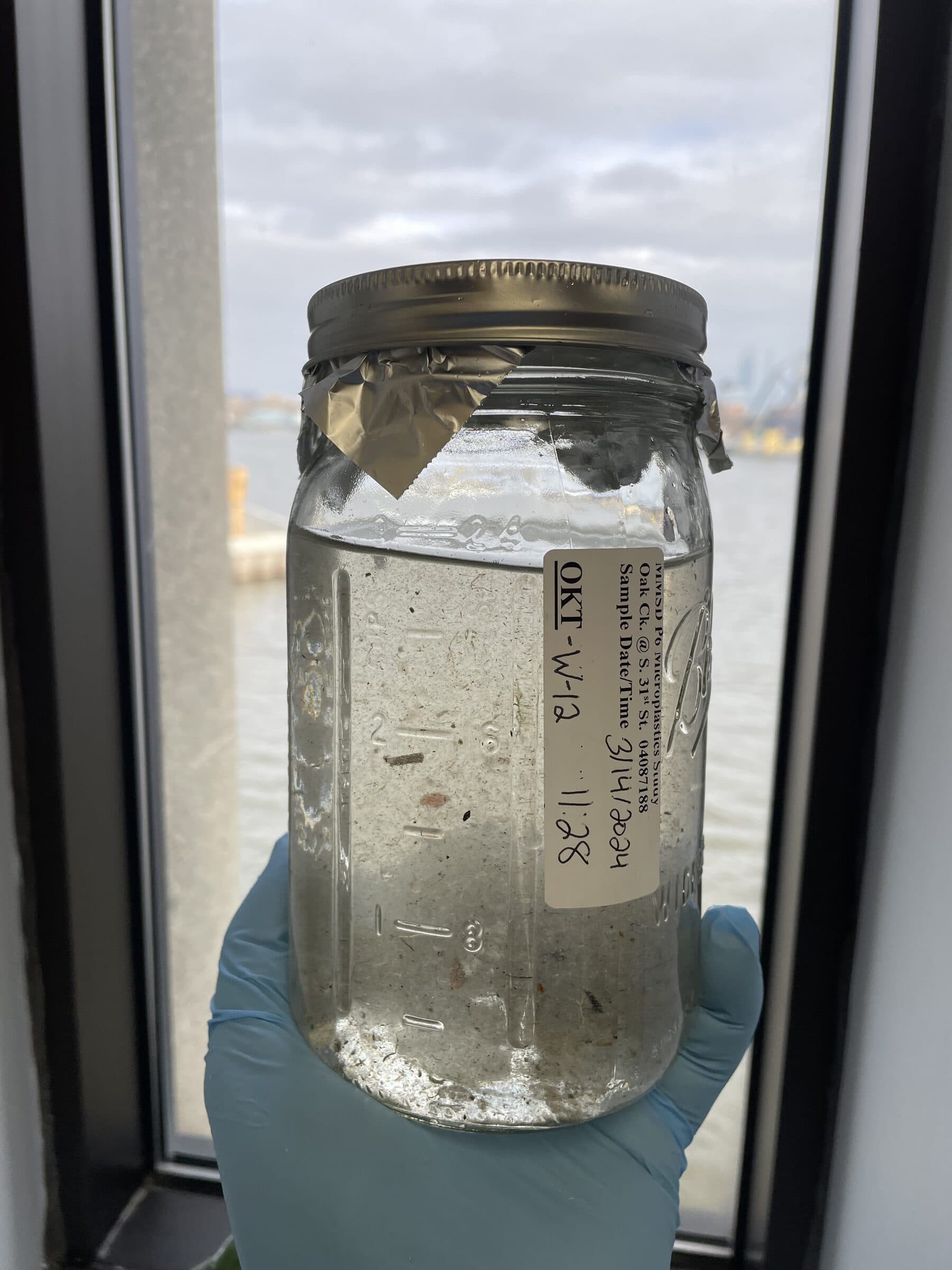
A particle’s behaviour and potential effects depend on more than whether it is plastic.
- Size
- Particles near 5 mm behave differently from particles measured in micrometres or nanometres.
- Shape
- A fibre, film, and fragment move through air, water, and organisms differently.
- Polymer
- Polyethylene, polypropylene, polyester, nylon, and other plastics have different densities and properties.
- Chemicals
- Plastics may contain additives and can interact with chemicals or microorganisms in their surroundings.
- Weathering
- Sunlight, heat, friction, and waves can change a particle and break it into smaller pieces.
Continue learning
Read the six-part sequence in order, or jump to a topic.